


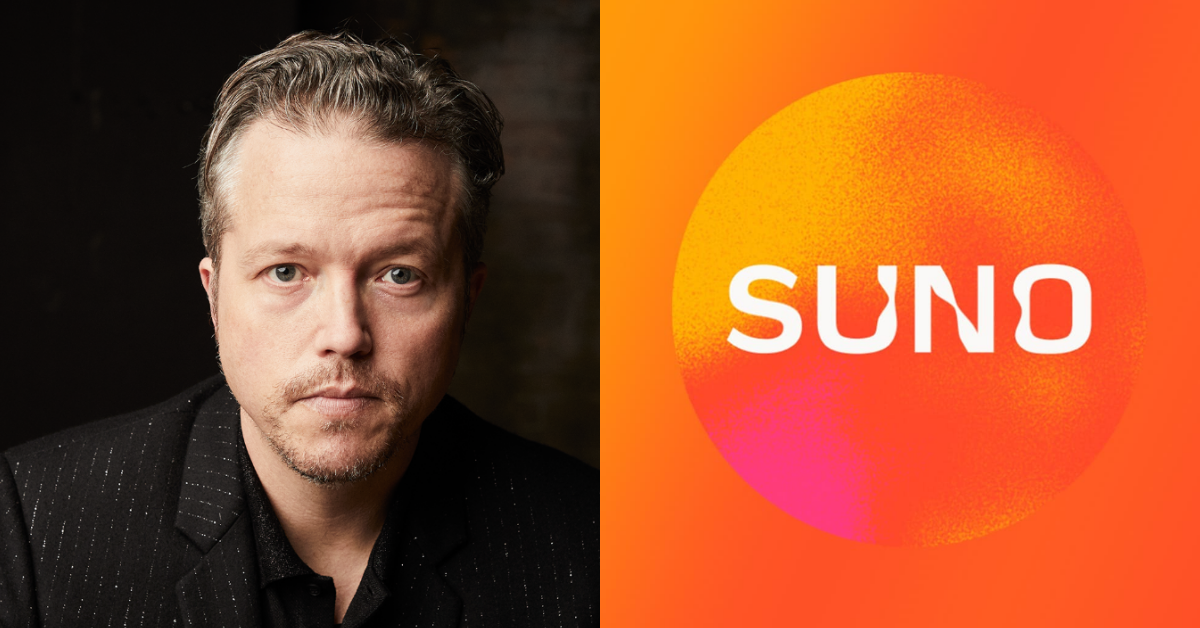
Grammy Award-winning “If We Were Vampires” singer Jason Isbell is coming for the latest AI Music Generator, Suno, after officially filing a class action lawsuit alongside numerous litigants against the company.
Yesterday, Monday, August 31, a legal complaint was filed against Suno by Isbell and fellow musicians David Lowery and Eduardo Calle, accusing the platform of taking an artist’s entire musical persona and implementing it as groundwork for their AI model. Per the lawsuit obtained by Billboard, Suno enables users to make their own songs, descriptions, and artwork based on a “beloved musician’s identity” by simply imputing an artist’s name.
The lawsuit also reads, “Suno’s system recognizes ‘Jason Isbell’ as far more than a mere text string; it is a retrieval key for a set of performer-specific representations that it can use to generate a response associated with that musician.” Noting that a simple prompt can evoke a mere replication of a generated song that’s eerily similar to one that a musician (ie. Isbell) might create, along with even a description of said musician’s attributes and a related image.
Isbell’s lawsuit notes, “This is true for countless other musicians.” In aim to prove his case, the complaint provided an example where they typed Isbell’s name into Suno and, in turn, it “produced an Americana song called ‘Paper Bell,’ imitating Isbell’s characteristic clear male vocals and country twang.”
While you’d think a growing AI company like Suno surely wouldn’t be stupid enough to dig itself into a hole by allowing users to simply type artists’ names into the prompt and have it spit out replicas, they have publicly stated that they aim to help eliminate imitation by employing filters that block people from prompting the model with celebrity names.
But unfortunately, these roadblocks are easily swindled, according to the lawsuit, which claims that simply adding a space in between each letter erases the filter. It goes on to use the example of massive artists like Michael Jackson, Bad Bunny, and Taylor Swift, noting that prompting Suno with the spelling, “t a y l o r s w i f t” will produce a Swift-esque breakup song.
Isbell argues that Suno is violating various state laws (including those in New York, California, and Tennessee) that protect an individual’s name, image, and likeness. Therefore, even if an artist’s copyrighted music is covered under Suno’s recent licensing partnerships with Warner Music Group and BMG, the artist, as an individual, could still have valid claims over the unauthorized use of their personal likeness.
If you recall, this is not the first time Isbell made his opinion known about the growing “AI-tool” taking to social media this past July to let it be known, “No suno for me thanks,” and “I actually enjoy the ‘making music’ part, not just the ‘getting paid’ part.”

In this case, Isbell hopes to seek a currently unspecified financial compensation for the proposed class of artist plaintiffs involved, noting that it could number in the “millions.” Suno is also currently facing numerous other lawsuits filed by Universal Music Group, Sony Music Group, and independent music publisher Round Hill Music.